

Pictures and recipes adapted from PinoyRecipe.net
How to cook Kansi
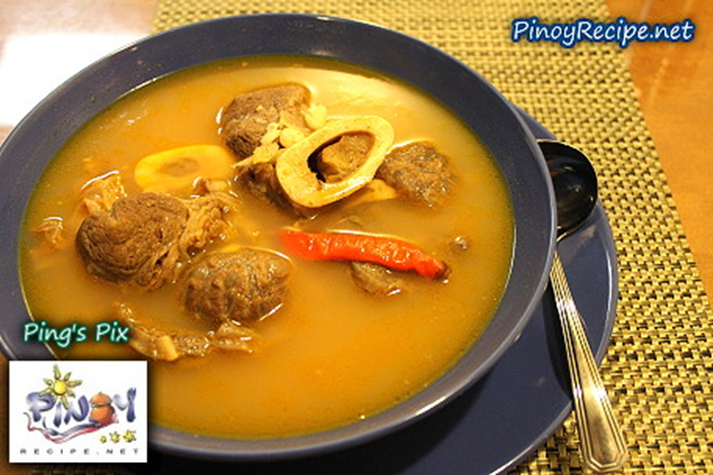
Kanse Recipe is an Ilonggo recipe that is sort of like a cross between Bulalo (beef bone marrow and vegetables soup) and Sinigang (sour pork soup). Kansi is one of the finest delicacies of Bacolod City, it is Ilonggo’s version of the famous Bulalo.
Enjoy the tangy and flavorful taste of Kansi and the aroma of lemon grass that will surely soothe you.
- 1 kilo Beef Shank
- Lemon grass (2 stalk)
- 2 medium onions
- Fresh ginger (1/2 cup, sliced)
- 2 long hot pepper
- Atchuete powder(1 Tablespoon)
- 6 TBS batwan puree
- 1/4 kilo green unripe Jackfruit ( sliced )
- 6 cloves garlic, crushed
- salt & pepper (to taste)
- Saute garlic and onions
- Add beef and ginger into the pot and pour just enough water to cover most of the meat (around 2L)
- Leave it to boil for about an hour to two hours until the meat is soft.
- Lower heat to simmer, add more water into the pot until meat is completely submerged
- Mix in the batwan puree, salt, and pepper
- Mix in long hot pepper (add more if you want it to be spicier)
- Put in sliced green jackfruit
- Leave to simmer until jackfruit is cooked and beef is very soft
- When it’s almost done, put in lemongrass (tie it into a knot) and atchuete for color
- Simmer for about 10 minutes and serve with hot rice.
How to cook Shrimp Sinigang with Cabbage
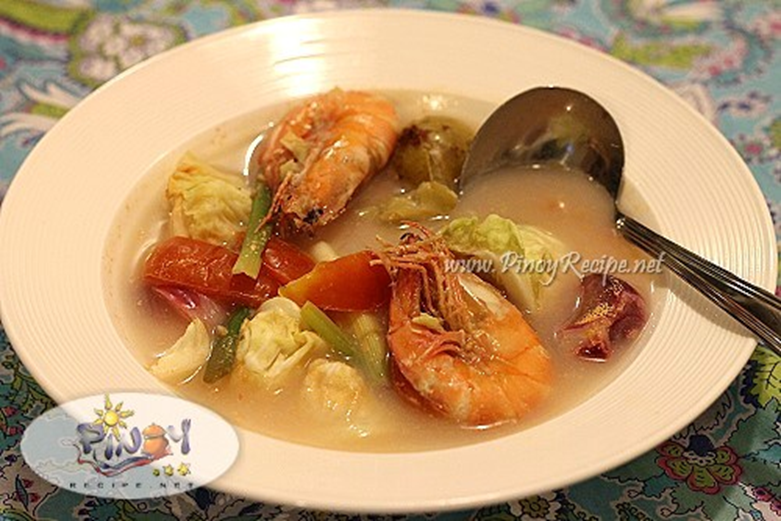
Shrimp Sinigang with Cabbage is a soup whose flavor is soured with batuan fruits which is abundant in the Western Visayas region of the Philippines. I like the subtle sourness of the batuan. It is a good replacement to the classic sampaloc broth.
Filipino Sinigang Soup is traditionally tamarind based. Other versions of the dish derive their sourness from ingredients such as guava, calamansi, bilimbing, or unripe mango among others. Powdered soup base or bouillon cubes for sinigang based on tamarind are also used in place of natural fruits.
- 1 Kilo Shrimp
- 3 to 4 TBS Batuan puree
- 1 big Onion (diced)
- 3 big tomatoes (quartered)
- 1/4 kilo Cabbage
- 3 pieces long green pepper (Siling haba)
- 5 cups rice-wash or water
- Salt or Patis (fish sauce)
- Boil water with onion, peppercorns, 1 tsp of salt and tomatoes for at least 15 minutes or until tomatoes are really macerated and soup is reddish already (this maximizes the flavor of tomatoes in the soup and adds sourness as well).
- Add Batuan puree and the Shrimp and let simmer on mid low heat for 5 minutes.
- Add veggies and let simmer uncovered for additional 5 minutes or until veggies are done.
- Season with Patis or fish sauce.
How to cook Kadyos Baboy Langka or KBL
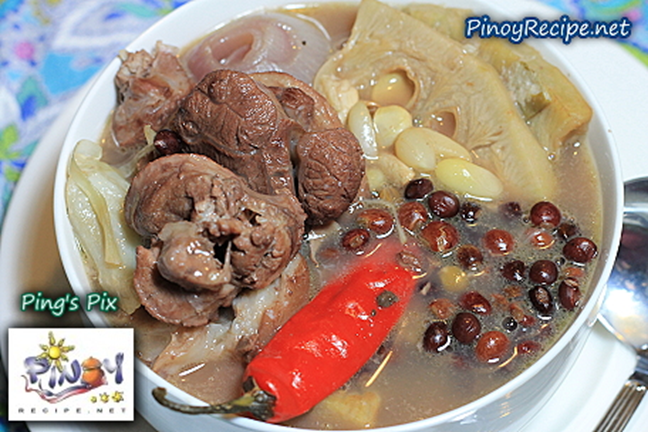
Kadyos Baboy Langka Recipe A very popular Ilonggo dish and well loved cuisine also known as KBL, stands for Kadyos (pigeon peas), Baboy (pork) and Langka (jackfruit).
Here are KBL’s most important ingredients… Kadyos. The kadyos gives the broth a light purplish hue and enhances the taste of soup. Baboy. In this recipe the pata (hocks) is the choice cut and you must choose the lean-fat-cartilage/tendon combo. The pork will give KBL a distinct taste. Langka. Unripe or raw jack fruit is required for this dish, it is usually cut into large cubes and boiled until cooked before adding the souring ingredient. Bat-wan is the recommended souring agent for this recipe but if its not available you can use Sinigang mix or Tamarind. Batwan or batuan is a tiny green fruit grows abundantly in the Western Visayas region and oftenly used as souring ingredients in soups and fish dishes.
Try this Filipino Recipes Portal version of Kadyos, Baboy Langka Recipe and give us your feedback.
- 1 Pork Pata (Hocks), sliced
- 1 /4 kilo unripe jackfruit, cut into large cubes
- 1 cup pigeon peas (kadyos)
- 4 to 5 tablespoons of batwan puree
- 2 bundled tanglad or lemongrass
- 1 medium sized Onion
- 1 piece beef cube
- 6 cups of water (per batch)
- 3 pieces Siling haba or Red Pepper
- salt and pepper to taste
- Prepare Kadyos by soaking it overnight.
- Pour water in a cooking pot (first batch) then add the Pork, Lemongrass and a little salt and pepper.
- Bring to a boil and simmer for 5 minutes then throw away the liquid this will remove the bad odor from the pork skin.
- Next Pour another 6 cups of water to the pot for second batch, add the onions and let boil.
- Add beef cube then on a low heat simmer for 40 to 45 minutes until the pork is tender.
- Once the pork is tender add the Kadyos or pigeon peas then cook it for 20 to 25 minutes or until the peas are tender.
- Then add Batwan puree, salt, pepper, and Langka or jackfruit (vegetable).
- Cover the cooking pot and cook for 15 minutes until the jackfruit is cooked.
- Add salt and season to taste.
- Serve and enjoy!
How to cook Sinigang na Baboy (Pork Sinigang)
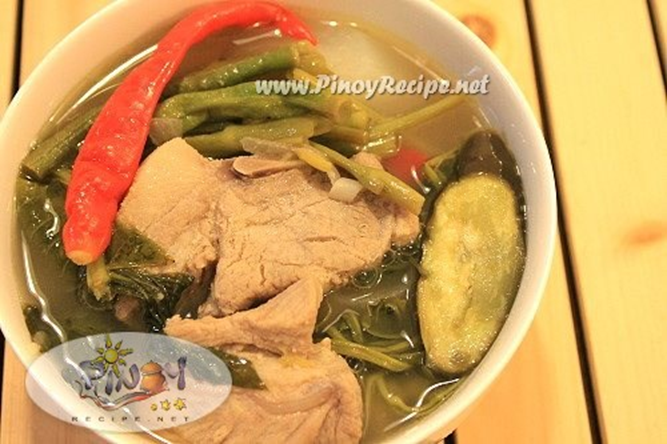
Have you eaten Sinigang na Baboy or Pork Sinigang? Well, if you haven’t – I might tell you that you missed one of the best Filipino dish. Sinigang na Baboy is a sour soup native to the Philippines. There are several ingredients that can be used as a souring agent.
The most common souring ingredients are tamarind fruit or known as sampaloc, other fruits such as guava, tomato, green mango, pineapple, and wild mangosteen or santol can also be used to make the sinigang taste sour. This particular soup dish uses pork as the main ingredient.
If you follow these directions it will be an awesome taste experience for you!
Ingredients
- 1 kilo Pork into small chunk cubes (you can now buy Pork Sinigang cut in Supermarkets)
- 2 medium size onion, quartered
- 2 medium size tomato, quartered
- 1 radish, sliced diagonally
- 4 gabi (taro root), cubed
- 2 medium size eggplant, sliced diagonally
- 1 bundle sitaw, cut into 2 inches length
- 1 bundle kangkong leaves
- 2-3 tbsp batwan puree
- 3 Siling haba
- Salt or Patis
Instructions
- Wash the pork cubes thoroughly. Put in a large pot, cover with enough water then let it stay there for 5 to 10 minutes, this process will lessen the scum that rises to the surface when you boil the meat. Now throw the reddish water after minutes.
- Add water again enough to cover the meat (around 1L) and bring to a boil, and simmer for 1 to 1½ hours or until pork meat are tender. Take out all scum that rises to the surface.
- When adding more water, make sure you add boiling water not just tap water, adding tap water will cause the meat shrink back.
- When the meat is already tender add gabi (taro root), and simmer for 8-10 minutes or until gabi are tender and start to disintegrate.
- Add onion, tomato and batwan puree and simmer for 3-5 minutes.
- Season with salt or patis (fish sauce). Add in eggplant, sitaw, and radish, cook for 3-5 minutes.
- Then add kangkong leaves and sili haba.
- Cook for another 2 minutes or until vegetables are cooked. Serve hot.
How to cook Sinampalukang Manok
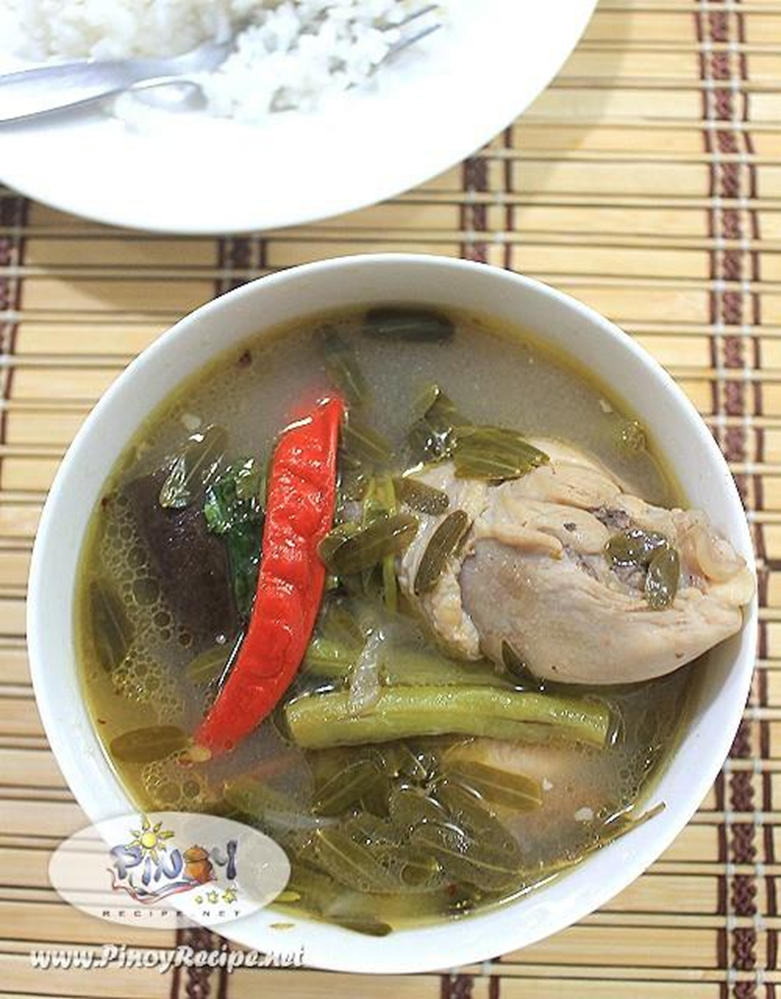
Sinampalukang Manok Recipe is like Sinigang but it is not a Sinigang variant because the main ingredients are sauteed first. Sinigang soup is characterized by its sour and savoury taste and is a very popular Filipino comfort food. In fact, in almost every province in the Philippines, there is a different version of sinigang mostly influenced by the availability of the souring ingredients or pampaasim.
Sinampalukang Manok is a famous Filipino sour soup dish and one of the favorites of every Filipino because of its savory taste. Best paired with Filipino Fried Chicken, Bagnet recipe, Daing na Bangus or Lechon Kawali.
Ingredients
- 1 kilo chicken, sliced into serving sizes (we used drumstick cut)
- 2 cups Kangkong(river spinach)
- 1 bunch Sitaw (string beans)
- 1 medium Eggplant, sliced
- 4 small tomatoes, quartered
- 1 bunch Lemongrass (tanglad)
- 1 medium onion, sliced
- 2 pcs. long chilli
- 3 to 4 TBS Batwan puree
- 1 chicken cube (bouillon)
- 3 tbsp Patis (fish sauce)
- 3 tbsp Canola Cooking oil
- 4 cups water
- salt to taste
Instructions
- Pour Canola oil in a large cooking pot then apply heat.
- Add onion and tomatoes then saute.
- When it becomes soft, add the chicken.
- Let the chicken cook until it turns light brown.
- Add in the fish sauce, and the chicken cube(bouillon) then stir well.
- Pour water and add lemongrass then cover the pot and bring it to boil.
- When it begins to boil add the batwan puree.
- Continue to cook until the chicken becomes tender.
- Add the chilis, eggplant and Sitaw (string beans) then simmer for 5 minutes.
- Add kangkong leaves and simmer for another 5 minutes.
- You can add more Salt according to your taste.
- Serve in a large bowl with fried fish or friend chicken.
Nutrition Information
Calories: 240 Fat: 3g Saturated fat: 3g Unsaturated fat: 2g Trans fat: 1gCarbohydrates: 58g Sugar: 0g Sodium: 106g Fiber: 8g Protein: 25gCholesterol: 70g
How to cook Sinigang na Baka Recipe
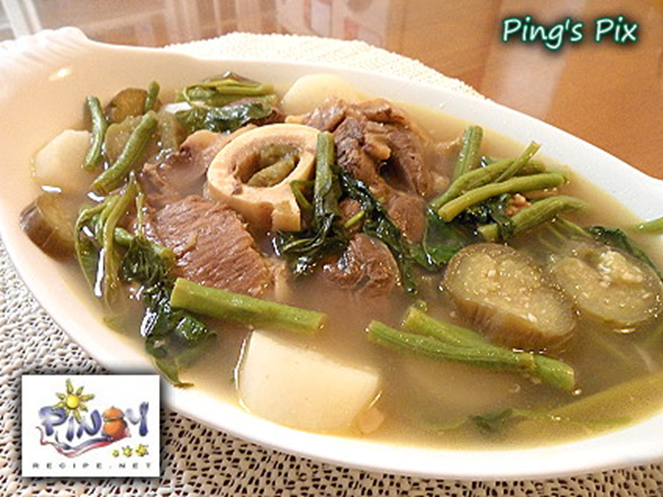
Sinigang is traditionally tamarind based. Other versions of the dish derive their sourness from ingredients such as guava, calamansi, balimbing, kamias, santol, batwan or batuan and raw mango among others. Vinegar is not used for making sinigang sour. A similar dish made with vinegar as the primary souring ingredient would tend to be categorized as paksiw in Philippine cuisine.
Sinigang is one of the most popular and well-liked by Filipinos, we cooked it with meat, fish and prawns or shrimp. In this Sinigang na Baka Recipe we used Beef Shanks and sinigang mix based on tamarind for sourness and we added gabi or taro root because it gives a texture and whitish color to the broth, we also added a lot of vegetables. To enhance the taste we add a little spice to this Sinigang na Baka Recipe by adding siling haba (long chili).
- 1 kilo Beef Shanks
- 2 medium size onion, quartered
- 2 medium size tomato, quartered
- 1 radish, sliced diagonally
- 4 gabi (taro root), cubed
- 2 medium size eggplant, sliced diagonally
- 1 bundle sitaw, cut into 2 inches length
- 1 bundle kangkong leaves
- 3-4 TBS batwan puree
- 3 Siling haba
- Salt or Patis
- Wash the beef shanks thoroughly. Put in a large pot, cover with enough water then let it stay there for 5 to 10 minutes, this process will lessen the scum that rises to the surface when you boil the meat. Now throw the reddish water after minutes.
- Add water again enough to cover the meat and bring to a boil, and simmer for 1 to 1 1/2 hours or until beef spareribs are tender. Take out all scum that rises to the surface. To add more water, make sure you add boiling water not just tap water, adding tap water will cause the meat shrink back.
- When the meat is already tender add gabi (taro root), and simmer for 8-10 minutes or until gabi are tender and start to disintegrate.
- Add onion, tomato and batwan puree and simmer for 3-5 minutes. Season with salt or patis (fish sauce). Add in eggplant, sitaw, and radish, cook for 3-5 minutes.
- Then add kangkong leaves and sili haba. Cook for another 2 minutes or until vegetables are cooked. Serve hot.
How to cook Puso ng Saging Sinigang na Bangus
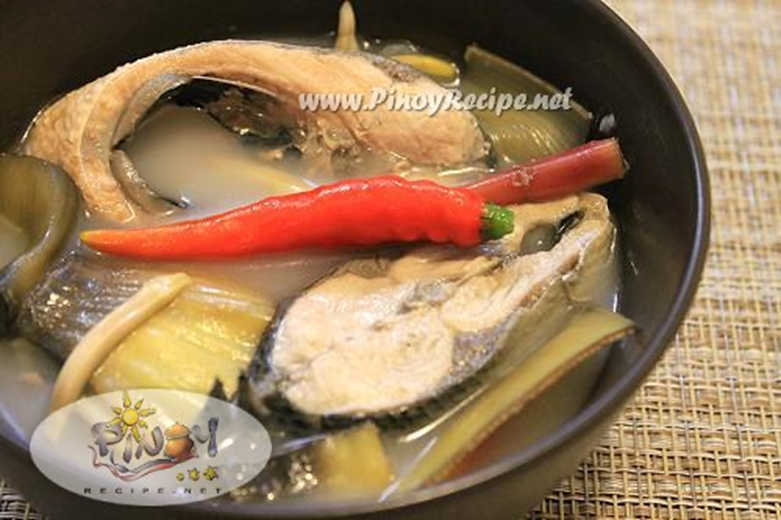
In this recipe we used the deep purplish-crimson-coloured banana blossom or banana heart in Filipino Puso ng Saging. Banana heart have lots of dietary fibers, proteins and unsaturated fatty acids, it is also rich in vitamin A, C and E and flavonoids. It is also known to alleviate the pain from menstrual cramps, according to common natural remedy practice.
Banana heart or banana blossom is commonly used as vegetables for cooking in the Philippines and other Asian countries. Others made it into a salad and it is also added to the famous Kare kare.
- 1 medium sized Bangus (Milkfish) about 1/2 kilo, scaled, gutted, cleaned and cut into 6 pcs
- 3-4 TBS batwan puree
- 2 ripe tomatoes, sliced
- 2 medium red onion, quartered
- 1 small taro about 100 grams, cut into cubes
- 1 medium radish (labanos), sliced diagonally
- 200 grams fresh banana flowers (bulaklak ng saging), you must remove the stick in the middle
- 1 small eggplant (talong), sliced at 1/4″ thick diagonally
- 2 pcs Siling Haba (finger chilis)
- salt to taste
- In a large pan, put the rice wash and bring to boil.
- Add the tomatoes, onion and taro. Cook for another 10 minutes.
- Add radish and Tamarind Sinigang mix then simmer for 2 minutes.
- Add in the banana flowers, eggplant, chilis and Bangus (milkfish) then add salt and cook for 5 minutes.
- Serve hot and with cooked rice and fish sauce, for your dip.
How to cook Sinigang na Malasugi
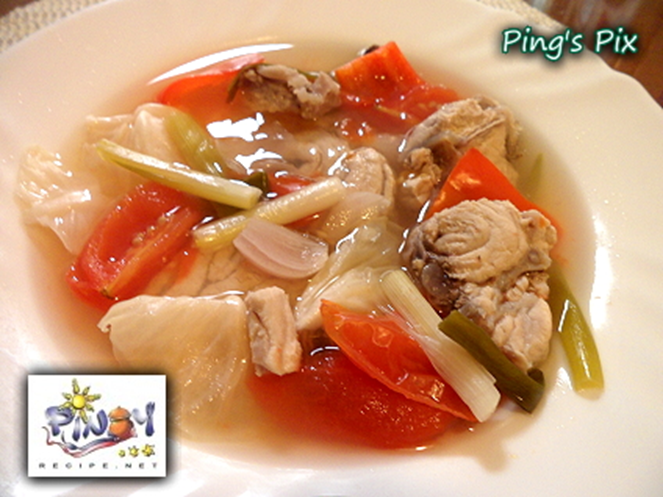
Sinigang na Malasugi Recipe, the famous Filipino soup Sinigang is traditionally tamarind based. Other versions of the dish derive their sourness from ingredients such as guava, calamansi, lemon, bilimbing, or raw mango among others. Powdered soup base or bouillon cubes for Sinigang based on tamarind are also used in place of natural fruits.
The meat in sinigang (e.g., fish, pork, shrimp, or beef) is often stewed with tamarinds, tomatoes, and onions. Other vegetables commonly used in the making of sinigang include okra, gabi (taro), labanos (daikon), kangkong (water spinach), sitaw (yardlong beans) and talong (eggplant). Most Pinoy like to cook their Sinigang dish with green finger pepper in order to enhance the taste while adding a little spice to the broth.
In most Fish Sinigang, Milkfish or bangus is the fish most commonly used because it is cheaper compared to other fish variety. Maya-maya, dalagang-bukid, Talakitok, Lapu-lapu, kanduli or any fleshy fish is just as good.
- 1/2 kilo of Malasugi (Swordfish or Blue Marlin)
- 1 onion, diced
- 3 tomatoes, diced
- 1/4 kilo cabbage
- 1 medium sized red bell pepper
- 1 green chili pepper
- 1 pc Lemon
- 3 to 4 TBS of batwan puree
- salt or patis (fish sauce)
- 1 liter of water
- Clean and Cut Malasugi fish into serving pieces. Set aside.
- Slice Tomatoes, Onions, Bell pepper, and Cabbage then set aside.
- Cut the lemon into 2 then remove the juice and set aside.
- Pour 1 liter of water in a pan, then add tomatoes, onions and salt or patis. Bring to a boil.
- Put in the batwan puree, green chili pepper and the lemon juice.
- Next, add the Malasugi fish and simmer for 5-10 minutes, depending on how big your fish pieces are.
- Add Bell pepper and Cabbage then simmer for another 2 to 5 minutes.
- Remove Sinigang na Malasugi from heat and transfer to a serving bowl. Add more Salt or Patis to taste.
- Serve immediately